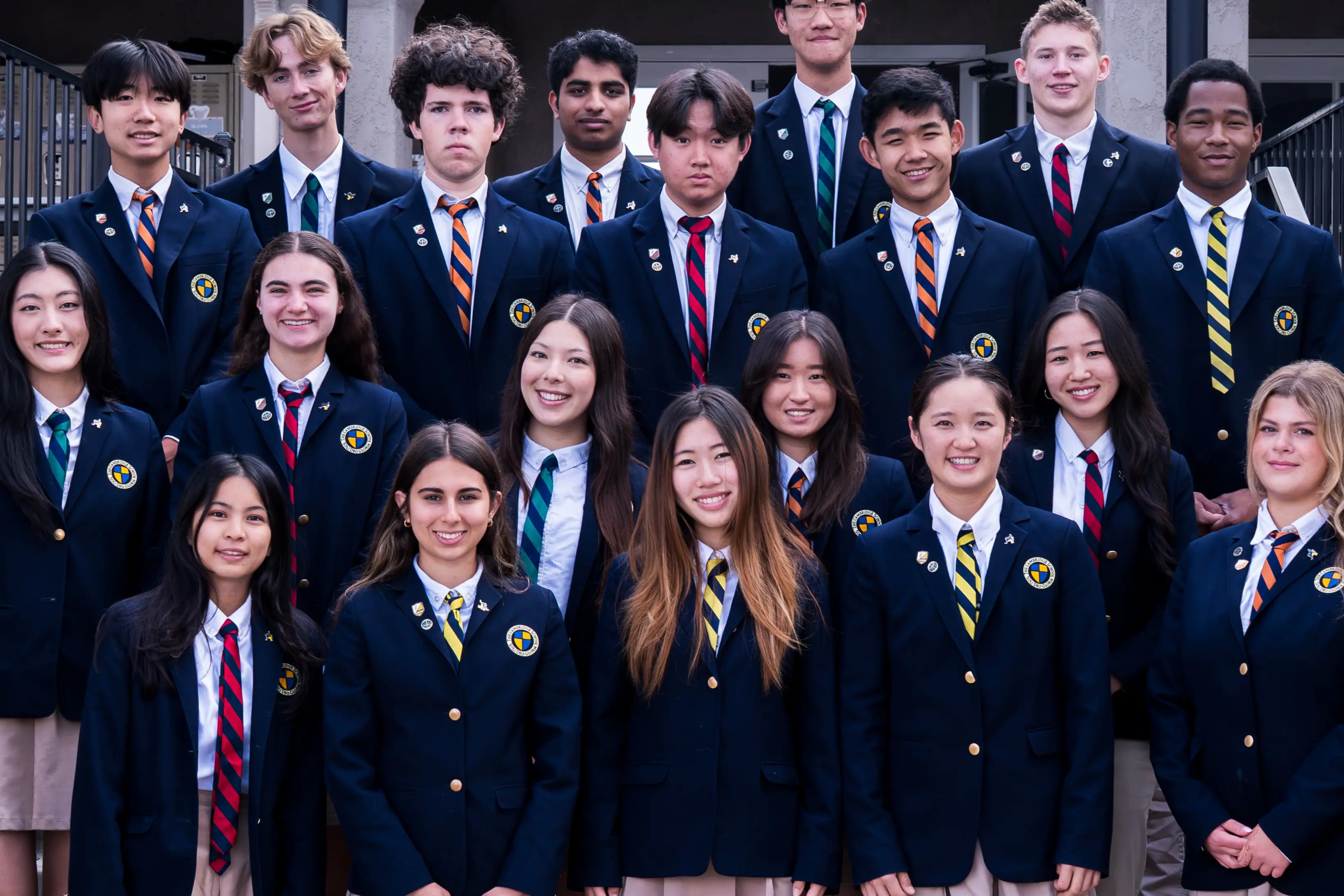
Rhetoric School Overview
After having studied and mastered the disciplines of grammar and logic, students spend the last four years studying rhetoric. Like logic, rhetoric is a “central” discipline–students do study other traditional subjects (e.g., history, science, math, literature, Latin and Greek) but do so from a rhetorical perspective, applying the skills and insights of rhetoric in their other classes.
It is this emphasis on rhetoric that sets our high school apart from other programs. It is at this final stage of their secondary education that our students not only synthesize all that they have learned in their previous schooling, but they gain a nuanced and complicated understanding of the material that they are studying. Cultivating a broad field of study, not merely limited to the spoken and written word, allows our students to engage meaningfully with our ever-changing world.
Rhetoric School Pedagogy
In the rhetoric school, students are invited into a more mature stage of learning - one that prioritizes synthesis, self-awareness, and engagement with a complex and dynamic world. While earlier stages emphasize knowledge acquisition and structured reasoning, this stage calls for further intellectual agility, the integration of diverse forms of knowledge, and the development of a responsive and discerning voice. The pedagogical emphasis shifts accordingly: teachers are not merely sources of information and curators of worthwhile artifacts, but embrace the role of interlocutor, challenging students to articulate and refine their own thinking in conversation with others and in light of the best that has been thought and said.
Rhetoric at Cambridge is not merely the practice of persuasive speech or effective writing, but the cultivation of a way of seeing - an ability to attend to the world with moral imagination, aesthetic sensitivity, and conceptual clarity. Students engage a wide range of rhetorical forms across disciplines, learning to interpret visual, textual, and cultural artifacts with nuance and to respond in modes suited to audience, context, and aim. They study rhetorical theory not only to “do what the masters do,” but to better perceive how the masters perceive - to understand the frameworks, assumptions, and techniques that shape public discourse and human understanding. In all of this, the rhetoric stage classroom is a space of serious inquiry, dynamic dialogue, and careful formation, where students are equipped to enter the world not simply as speakers, but as wise participants in the shared work of truth-seeking.
More than Merely Speaking Well
Rhetoric is a commonly misunderstood word, discipline, and educational stage.
Even within the growing movement of classical schools, rhetoric is often presented as “the art of persuasion” or “speaking well.” While these definitions are not incorrect, they are certainly incomplete.
| Read More... |
|---|
|
To understand rhetoric as mere persuasion is to do it a great disservice. Rhetoric is a tool that is ordered toward the pursuit of understanding and the discernment of truth. Rhetoric creates the space for - and the ability to - navigate the world of ideas with nuance and virtue. Jack Selzer, a contemporary scholar of rhetoric, defines rhetoric as “the study of language and the study of how it is used,” and Wayne Booth suggests that language is “the medium in which selves grow, the social invention through which we make each other and the structures that are our world, the shared product of our efforts to cope with experience.” Language is fundamental to who we are, how we relate to our neighbor, and to the rest of the world around us. We have been made in the image of a speaking God, the Word incarnate who created and sustains the world by the word of his power. In that light, rhetoric is essentially human, positioning us humbly to know and speak truth with competence and wisdom. |


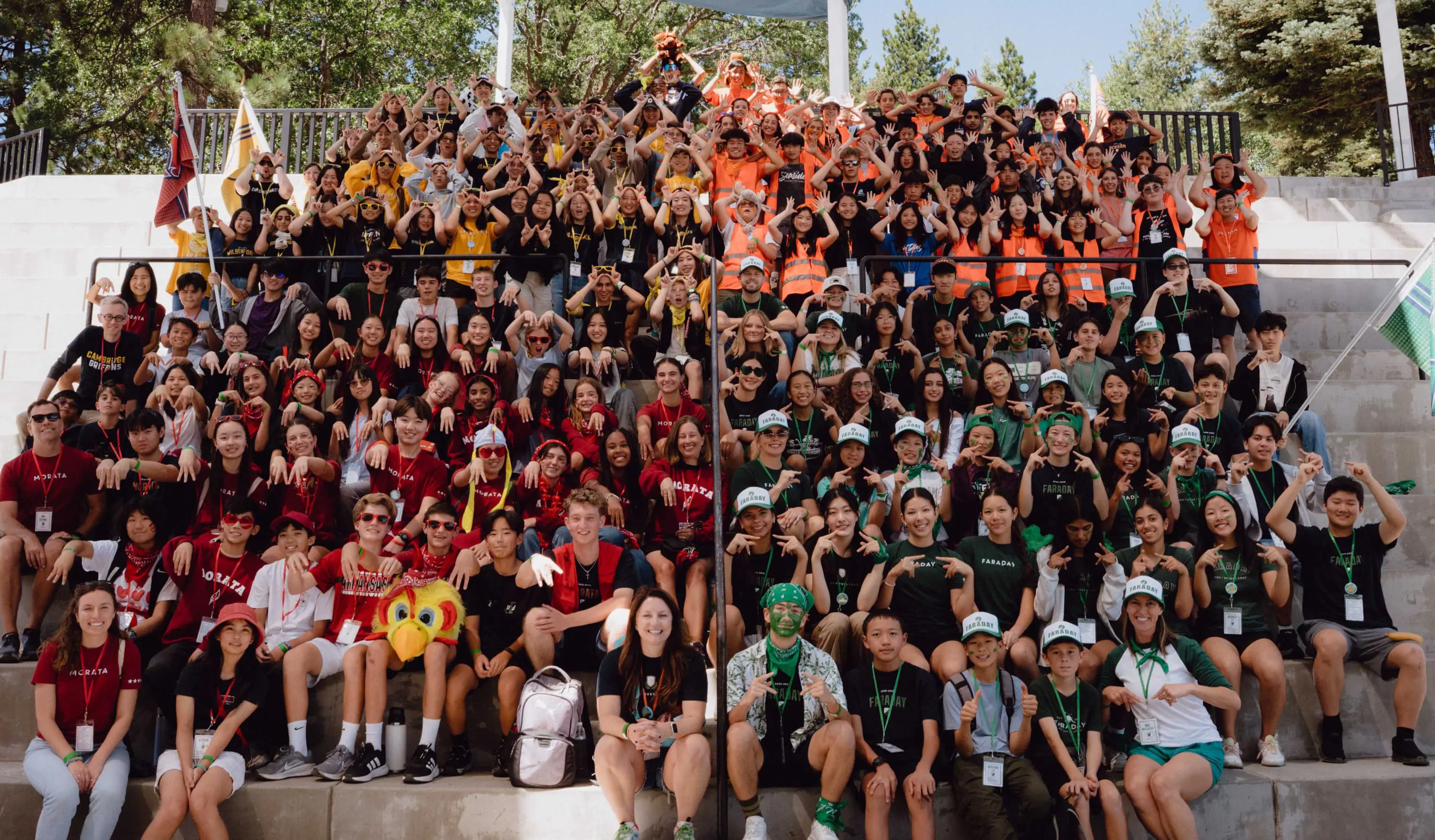


Rhetoric School Curriculum
Rhetoric, while a paradigm discipline studied at The Cambridge School, also represents the final stage of the three stages of a Cambridge education. At this culminating level, students engage with the curriculum in a more mature manner, synthesizing knowledge acquired in earlier years while applying rhetorical discipline to their studies.
The rhetoric curriculum expands upon the foundations established in grammar and logic schools, emphasizing intellectual integration and thoughtful expression across various subjects. Students encounter a comprehensive course of study that includes history, science, math, literature, Latin and Greek, music, and art.
Through this curriculum, rhetoric students learn to interpret and apply rhetorical principles across all disciplines, preparing them to communicate effectively and think discerningly in any field of future study.
Logic
When children become naturally argumentative, the logic stage teaches students to engage in debate and discussions thoughtfully and charitably.
Students are taught Socratically and are trained in informal and formal logic. This logical training spans all disciplines and is cultivated in tandem with intellectual and moral virtues.
Rhetoric
The culmination of a rich and intentional education, the rhetoric stage introduces greater nuance and further complication to the foundational skills gained in the previous stages.
This rhetorically oriented education strives to cultivate students who are fluent in multiple literacies* and equipped to thoughtfully dialogue with the many competing voices around them.
Pedagogical Emphasis
The focus or priority given to certain teaching methods or content.
Artifacts
Objects or materials used as educational tools, often historical or cultural, to provide tangible connections to learning.
Interlocutor
A participant in dialogue or discussion, essential in the Socratic method for exploring ideas collaboratively.
Moral Imagination
The capacity to envision and empathize with ethical situations.
Aesthetic Sensitivity
An appreciation for beauty and artistic expression, developed through engagement with classical art and literature.
Conceptual Clarity
The clear and precise understanding of ideas.
Rhetorical Forms
Structured patterns of speech or writing—such as narration, argument, exhortation, or lament—used to shape thought, stir emotion, and convey truth in ways suited to purpose, audience, and context.
Rhetorical Theory
The study of how language is used to seek truth, move others, and build understanding through reasoned, ethical, and artful communication.
Rhetorical Principles
The foundational elements of effective discourse: clarity, truthfulness, audience awareness, emotional and ethical appeal, purposeful structure, and the pursuit of wisdom through words.