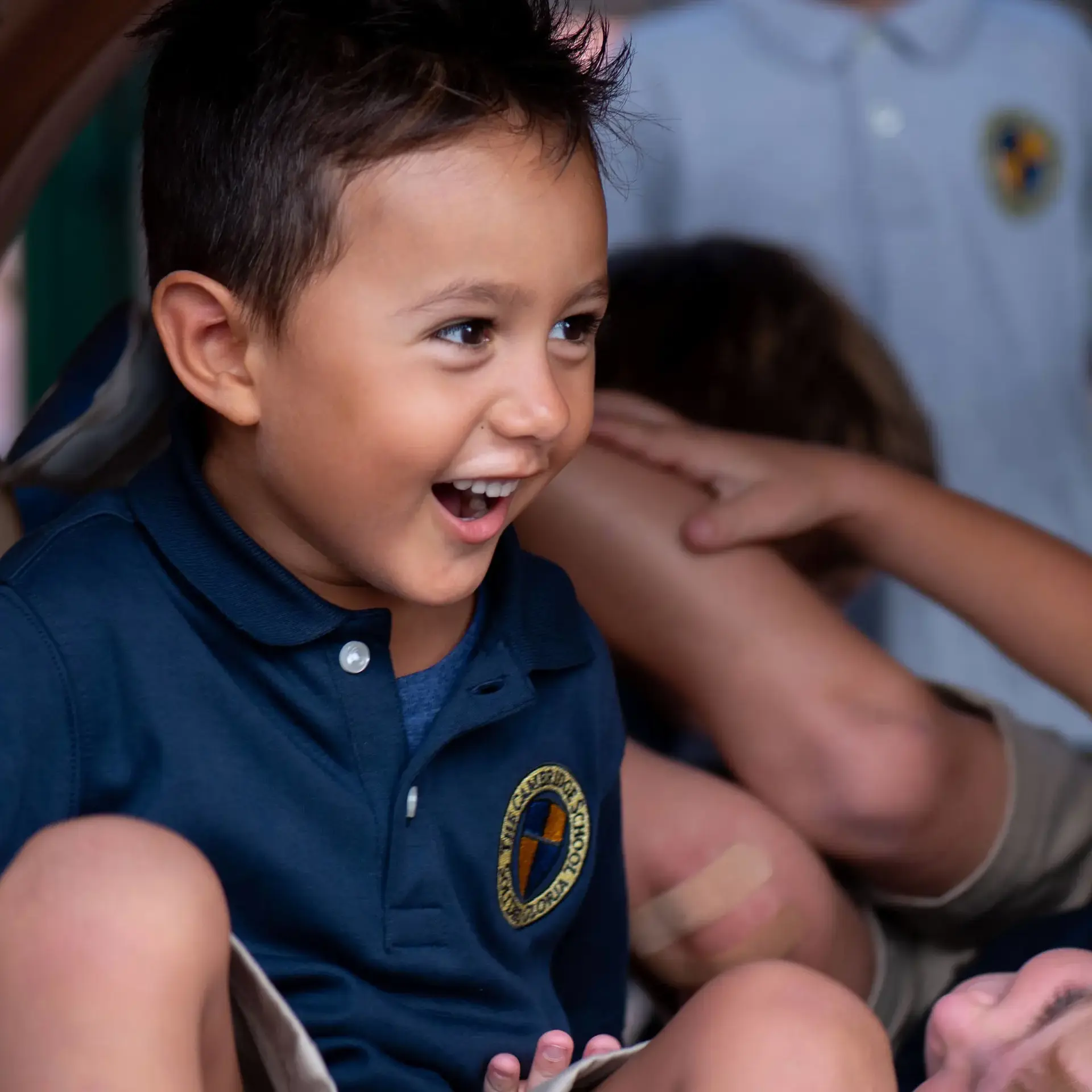
Cultivating the Whole Child
Mind
Young students learn through engaging and developmentally appropriate lessons. Chants, songs, and rhymes are used to help students in the learning process. Hands-on and group activities along with individual work are all used in the teaching process as the children learn to be students.
Body
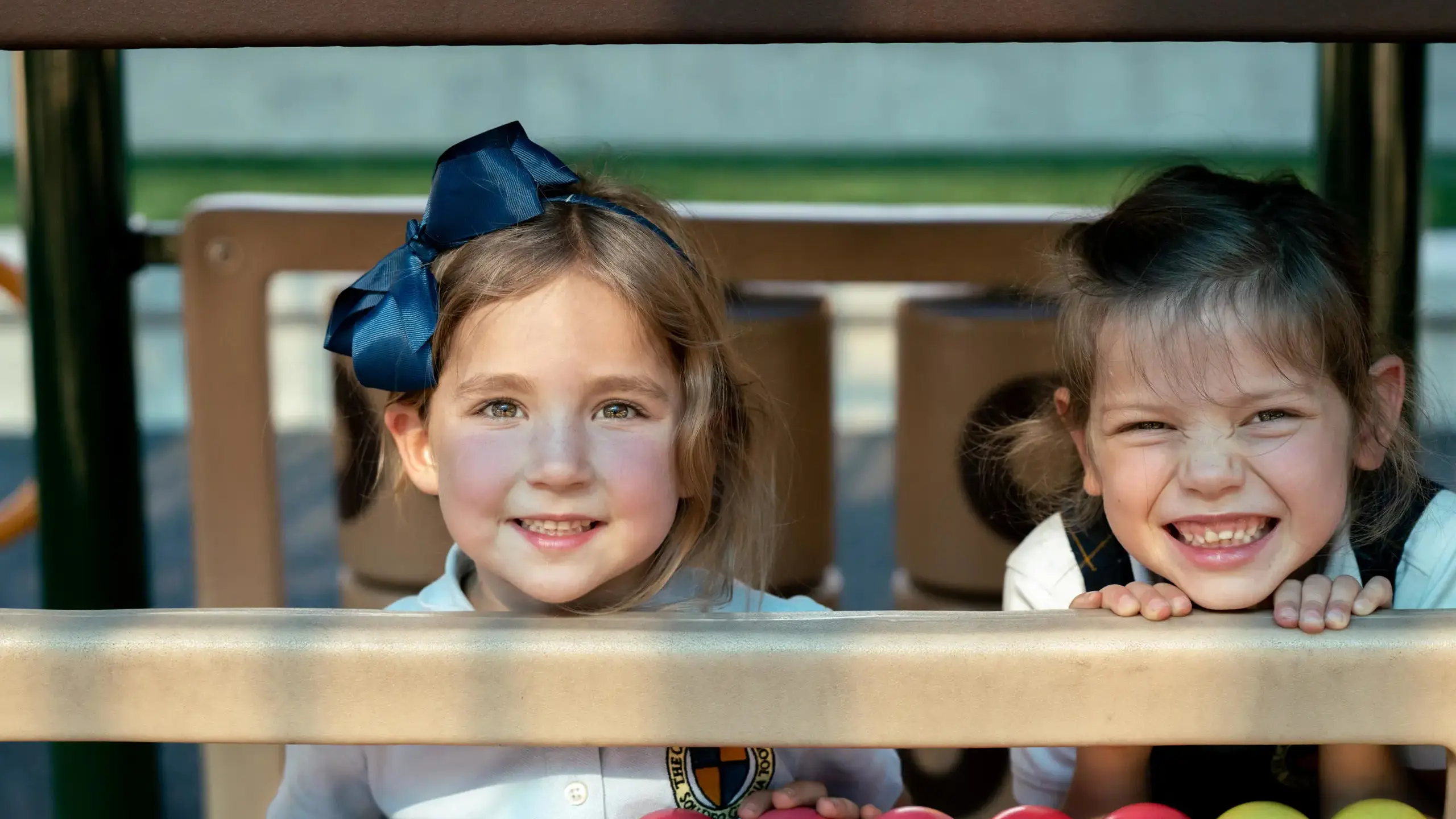
Research shows that physical activity helps improve academic and cognitive performance. Our junior kindergarten program focuses on keeping the children actively moving during recess, in intentional ways within the classroom, and during structured time in motor lab.
Soul
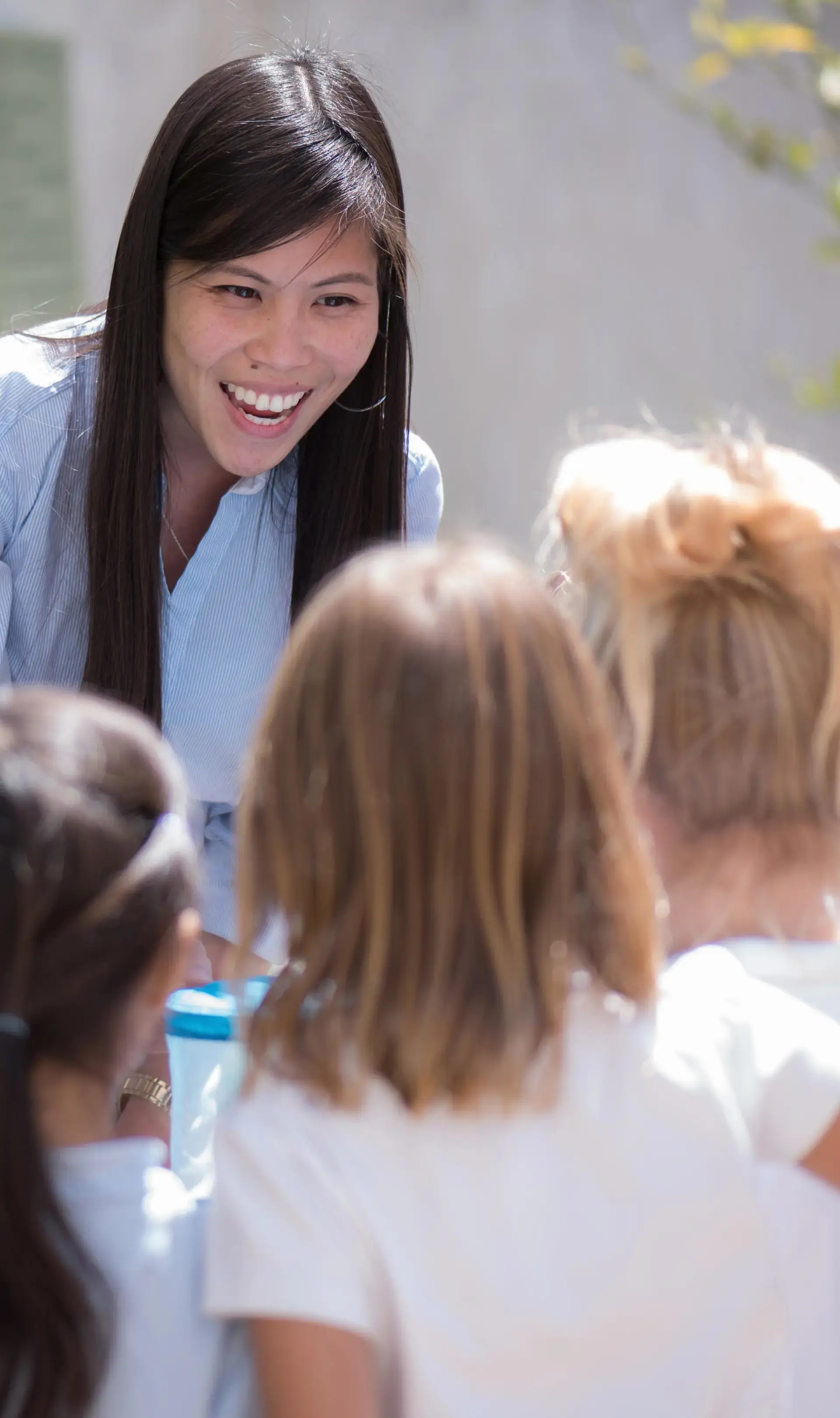
In junior kindergarten, students begin the gentle work of learning how to live well with others. As they grow in independence and social awareness, they are guided to practice kindness, patience, and respect - learning what it means to be a beloved and loving member of a community. In age-appropriate ways, they are introduced to the idea that they are loved by God and called to love others in return. Through stories, songs, shared experiences, and daily routines, children are invited to see the good in others, delight in the wonder of the world, and begin forming the habits of heart and mind that will shape their relationships for years to come.
Motor Lab
A space designed to develop fine and gross motor skills through structured physical activities.
Phonemic Awareness
The ability to hear, identify, and manipulate individual sounds (phonemes) in spoken words.
Segmentation
Dividing words into their constituent sounds or syllables, aiding in reading and spelling.
Decoding
Translating written symbols into their corresponding sounds to read words accurately.
Number Sense
An intuitive understanding of numbers, their magnitude, relationships, and how they are affected by operations.
Number Sequencing
The ability to understand and arrange numbers in a logical order, foundational for arithmetic skills.
Academics
Phonics
Students begin grammar school by gaining the essential skills of literacy. Students engage with a robust curriculum that teaches phonemic awareness, segmentation, decoding, reading fluency, and comprehension. As the students master these skills, they implement them in other core subjects like spelling and composition. Phonics instruction spans junior kindergarten - third grade and allows the students to transition from learning to read to reading to learn.
Mathematics
Students learn number sense and recognition, patterning, graphing, shapes, and number sequencing. Students also work through word problems, math facts, fractions, time, and money.
Art
Students learn about a variety of artists and artistic styles – moving from art appreciation and art history, to art theory, and eventually to practice. Students learn the mechanics and tools used to create these styles and work to create their own imitations. After this foundation is complete, students are able to engage in creating their own original pieces. Students learn types of lines, strokes, shapes, and space, as well as primary and secondary colors. Art class is held once a week.
Music
Similar to our art program, our musical studies begin with appreciating great works before transitioning into music history and theory – preparing our students with a foundation for their eventual practice. Students learn about the different eras and highlight composers from each era using music mapping, and body movements to the music. Students learn to identify a variety of instruments both by sight and sound. The students also attend a special music class once a week where they learn to read and analyze music, evaluate musical performances, explore the relationship between music, religion, and culture, and learn to play simple wind and percussion instruments.
Bible
Students learn about the attributes of God through stories from the Bible, memory work, and hymns. Students work through the Old and New Testaments, seeking to understand the Bible as a cohesive story of redemption.
Science
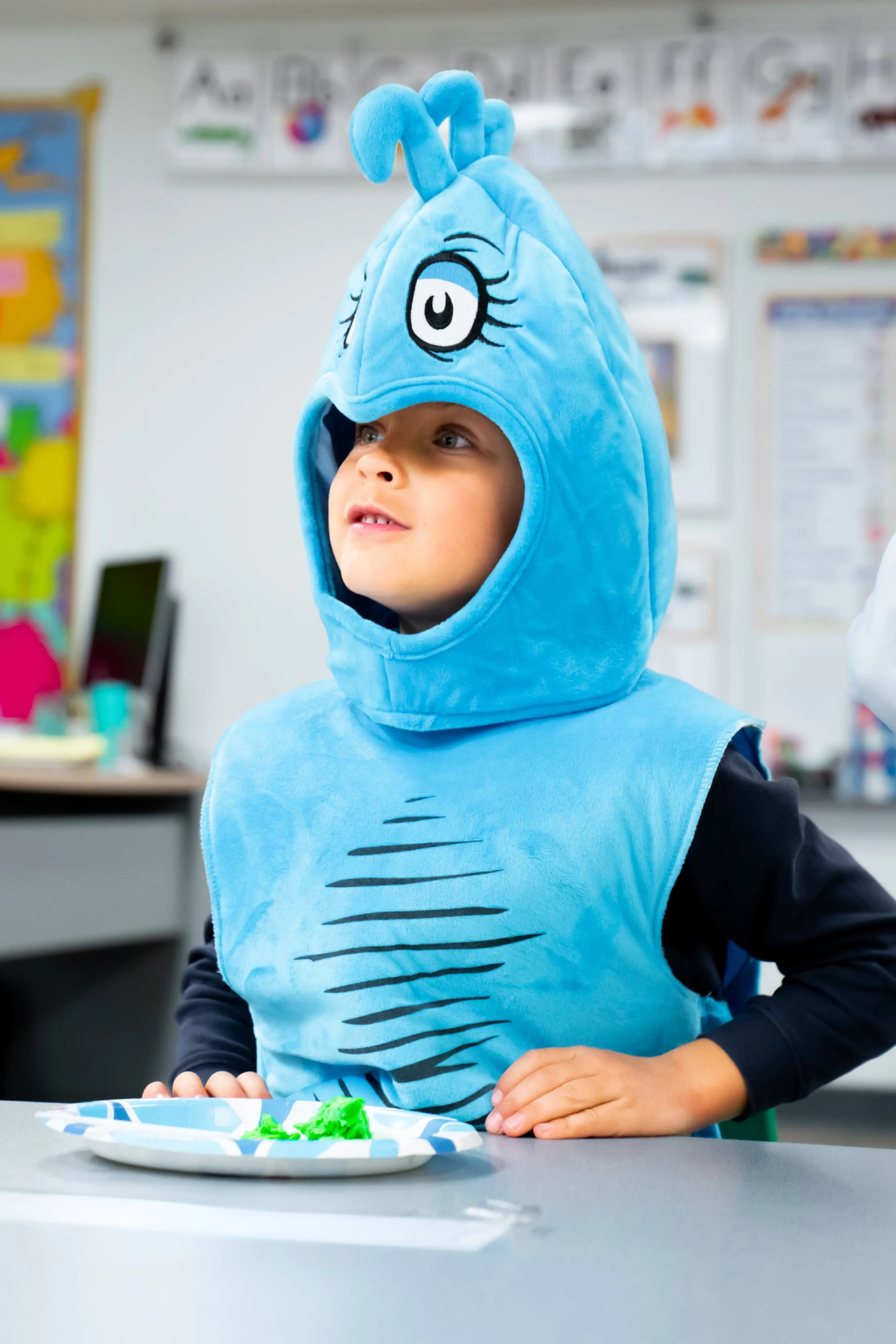
Our junior kindergarten students gain early fluency in science through careful observation, vocabulary building, and concept development, while experiencing wonder and delight in God's creation.