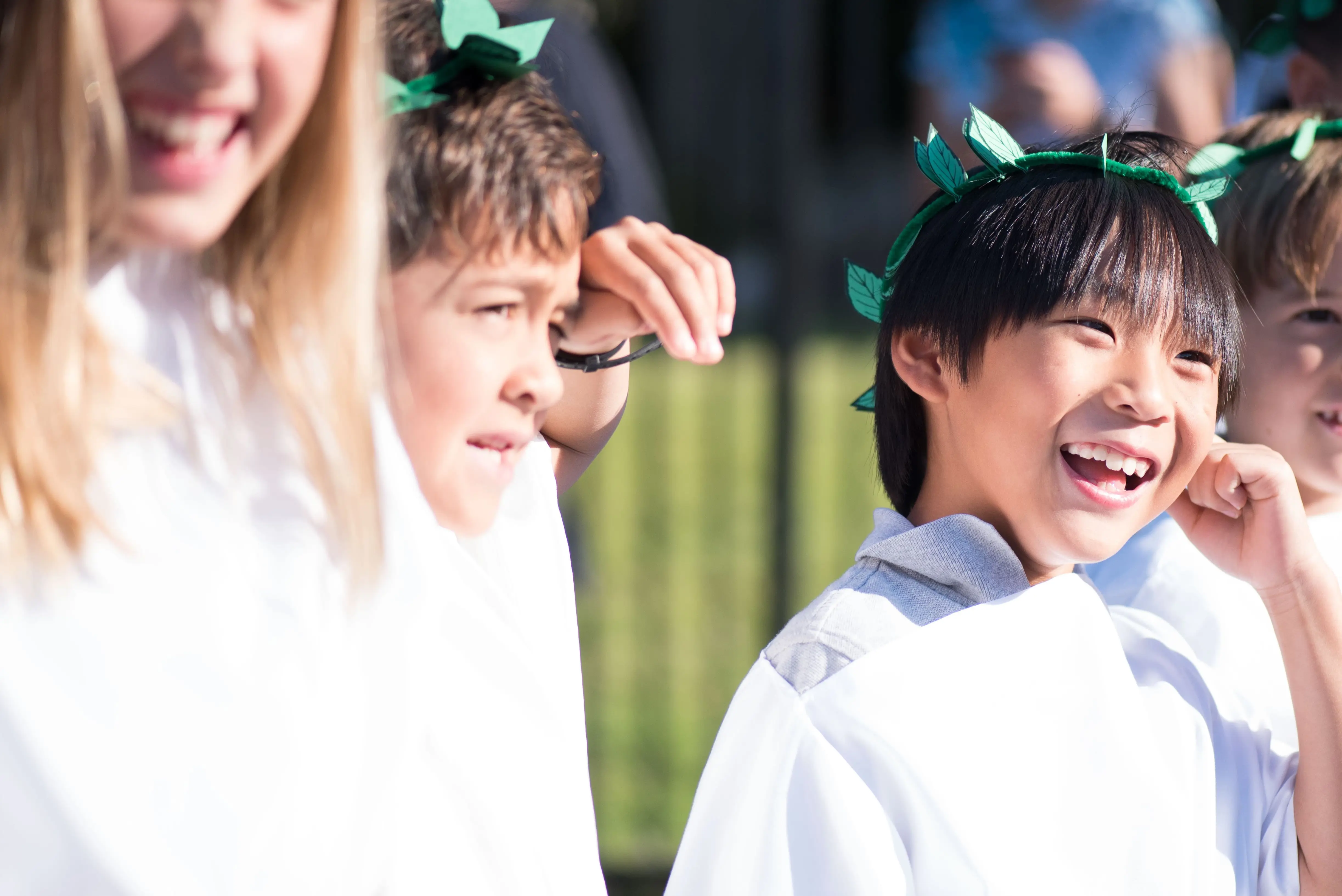
Grammar School
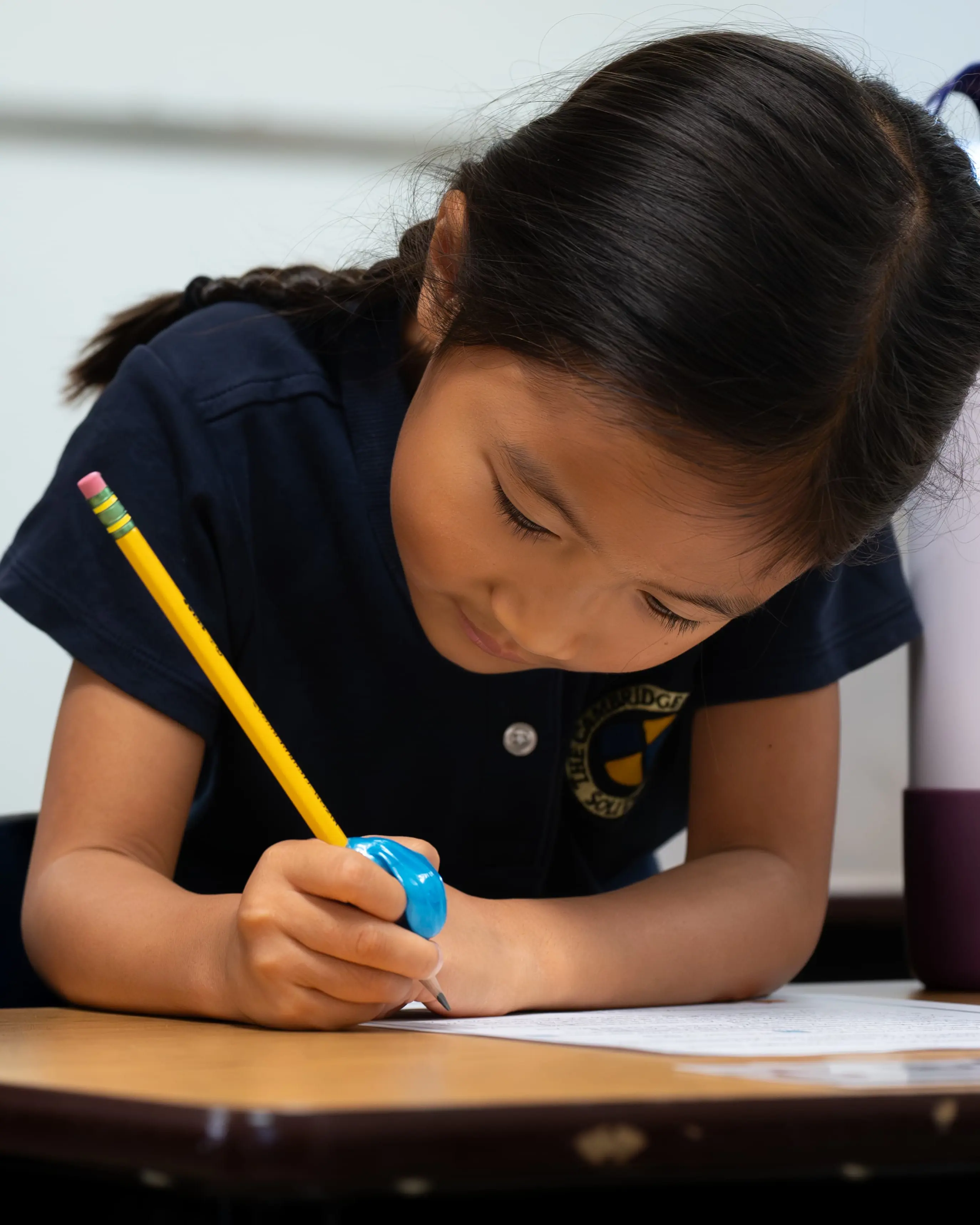
The grammar school at The Cambridge School consists of grades junior kindergarten through sixth. The grammar school can be understood in terms of its pedagogy, curriculum, and culture.
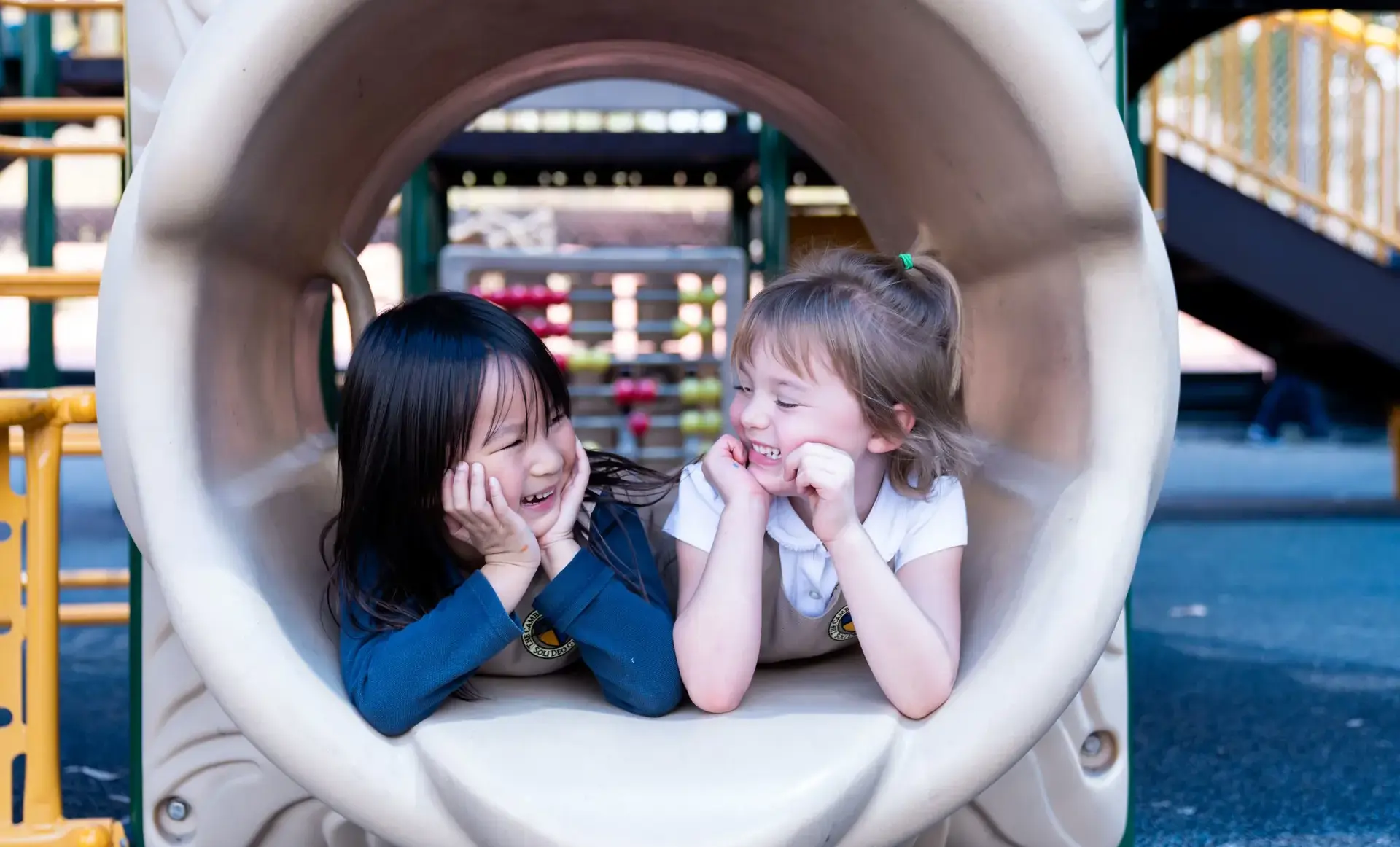
How to Prepare for Early Education
Junior kindergarten through first grade present a unique opportunity to prepare your child well for a new stage in life. It can be overwhelming and difficult to sift through best practices. That is why we have prepared a clear guide to ensure your child is best prepared for their early education experience.
Grammar School Pedagogy
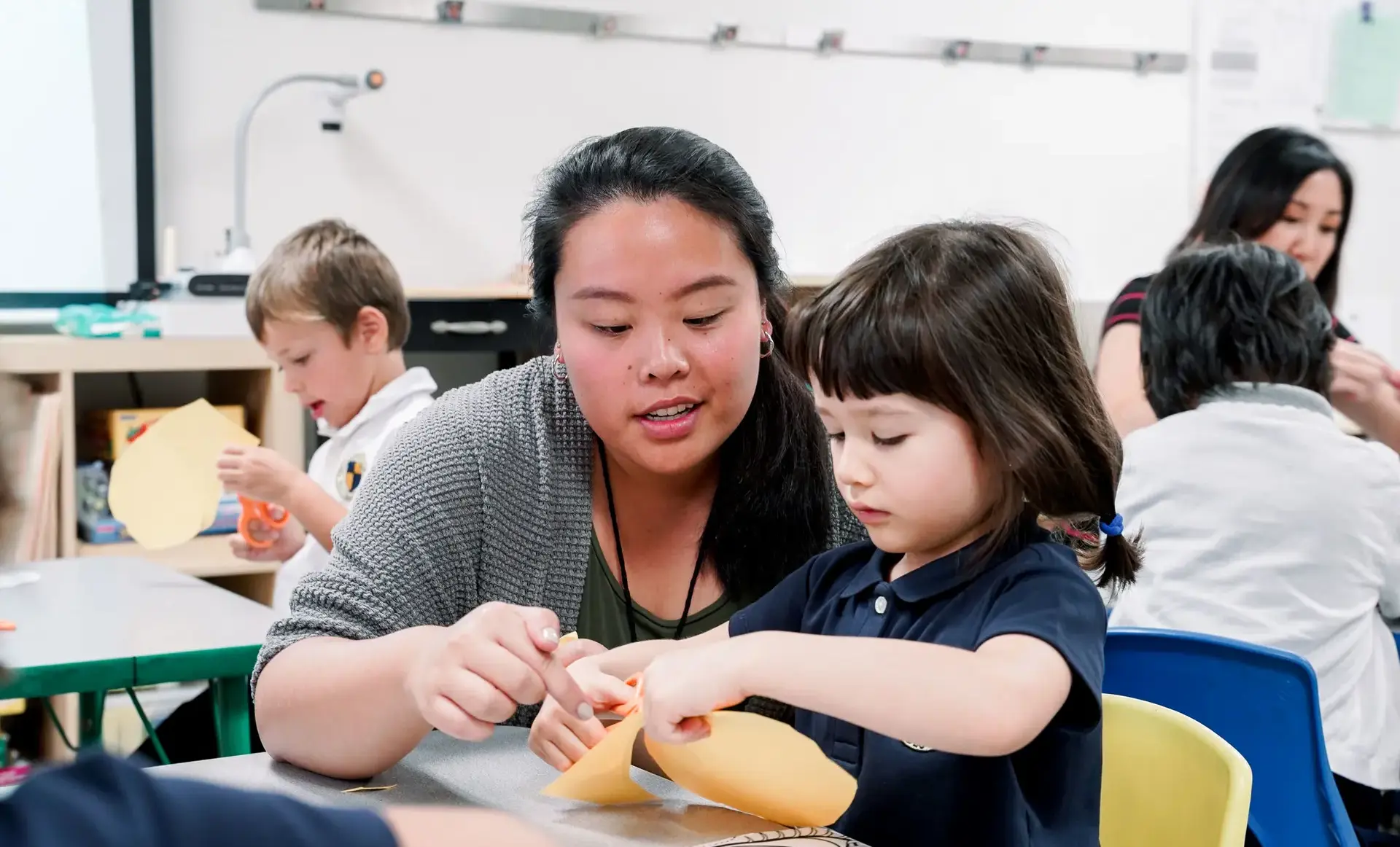
During the grammar school years, students memorize important information through songs, chants, jingles and rhymes.
The classical pedagogy also favors review and repetition, which occur frequently through songs and other mnemonic devices to embed meaningful information into long-term memory.
The grammar school teachers are masters of the curriculum. As such, they utilize a variety of teaching methods that demonstrate the classical approach of embodied learning. These include, but are not limited to, oral and written instruction, robust discussion and analysis, storytelling, and multisensory lessons. Furthermore, the grammar school embraces the multi-modal pedagogy that engages the students’ minds and senses, a proven approach to deepening learning and creating long-term memories. This approach is used in embodied phonics chants, various math manipulatives, history feast days, character-driven literature discussions, and science experiments.
Grammar School Curriculum
In the early grades (junior kindergarten - second grade), students enter a foundational period where their minds are exceptionally receptive to language patterns and mathematical concepts. This natural readiness guides our pedagogical approach, particularly in reading and mathematics — disciplines that form essential foundations for subsequent learning. Our curriculum honors the young child's inherent desire for order and meaning: grammar study begins in first grade to illuminate the structure of language, while gentle Latin instruction starts in kindergarten when children are neurologically inclined towards linguistic development.
Across the grammar school curriculum — from history and literature to science, Bible, and the arts — children engage with ideas that have shaped human understanding through the ages. This prepares them to advance with curiosity and purpose into deeper explorations of truth, goodness, and beauty. Each element of our approach recognizes that these early years establish not just knowledge but the character and habits of mind that will guide a lifetime of learning.
Grammar School Culture
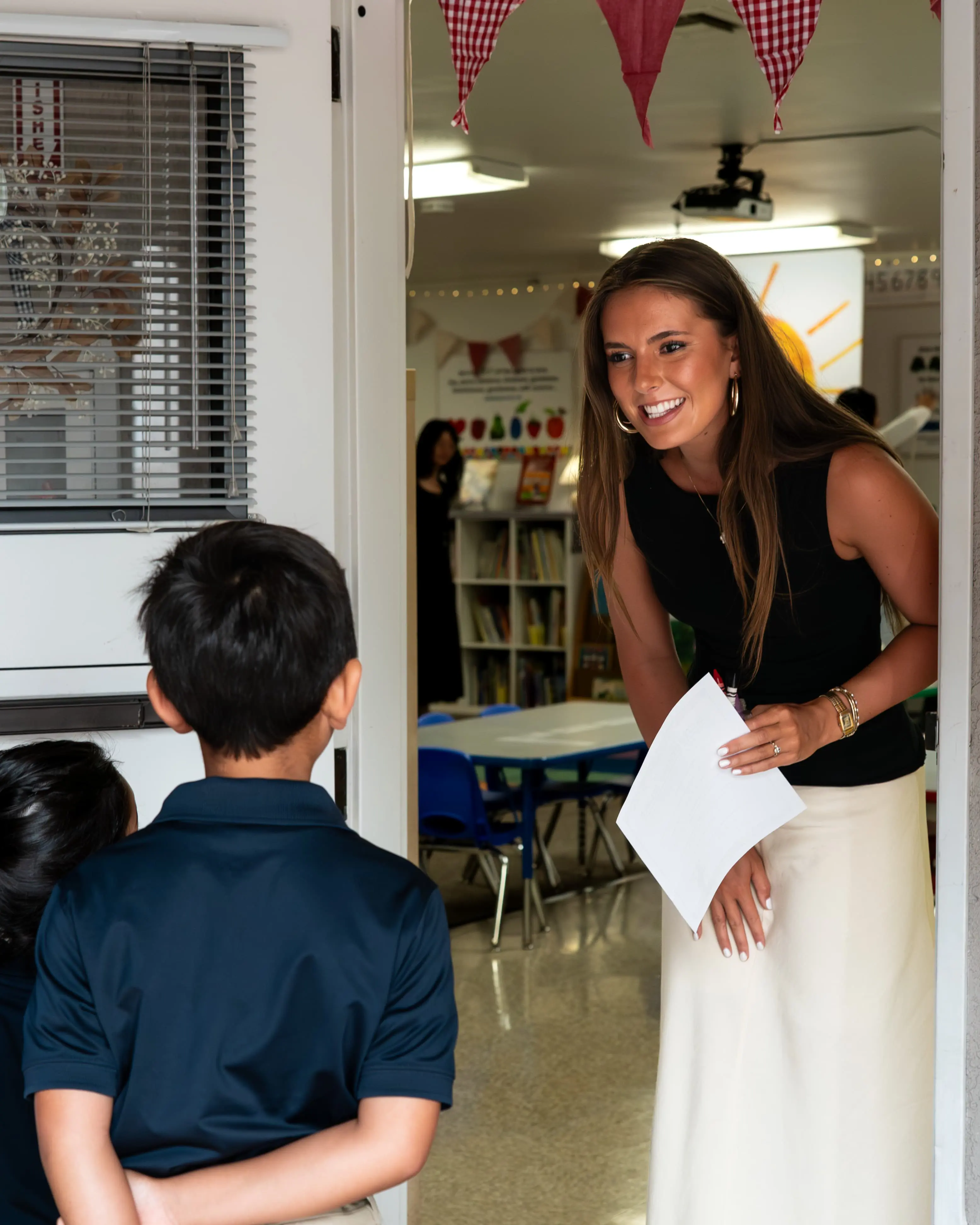
The culture of the grammar school is characterised by order, respect, peace, wonder, and curiosity. Families and students who apply to The Cambridge School participate in an interview and screening process designed to foster a community where respectful, courteous behavior is valued both at home and at school. Our school and classroom behavior guidelines are clear and enforced so that students are secure in an environment with age-appropriate boundaries in order to promote safety and predictability, while bursting with lively engagement and joyful learning.
Logic
When children become naturally argumentative, the logic stage teaches students to engage in debate and discussions thoughtfully and charitably.
Students are taught Socratically and are trained in informal and formal logic. This logical training spans all disciplines and is cultivated in tandem with intellectual and moral virtues.
Rhetoric
The culmination of a rich and intentional education, the rhetoric stage introduces greater nuance and further complication to the foundational skills gained in the previous stages.
This rhetorically oriented education strives to cultivate students who are fluent in multiple literacies and equipped to thoughtfully dialogue with the many competing voices around them.
Classical Pedagogy
An approach to teaching grounded in the classical tradition, emphasizing the cultivation of virtue and wisdom through structured learning.
Embodied Learning
Learning that integrates physical experience with intellectual engagement.
Multi-modal Learning
An instructional approach that employs multiple methods and sensory experiences to enhance learning.
Math Manipulatives
Physical tools used to teach mathematical concepts, supporting the classical emphasis on concrete understanding before abstract reasoning.
Pedagogical Approach
The overarching method and practice of teaching.
Socratic
Engaging in learning through the Socratic method, characterized by dialogue and critical questioning.
Informal Logic
The study of reasoning, both in everyday language (informal) and structured systems (formal).
Literacies
The diverse forms of fluency needed to engage wisely with the world—reading texts, interpreting culture, speaking well, listening attentively, and discerning truth amid competing voices.